

2 and 3 digit addition Worksheet for addition practice

Practice 2 digit by 2 digit addition without regrouping worksheet
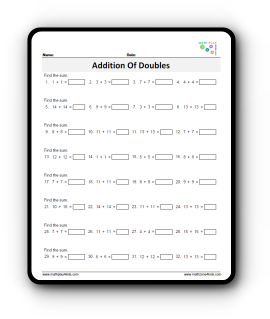
Learn 2 digit number addition with this worksheet

Worksheet for 2 step addition and subtraction word problems
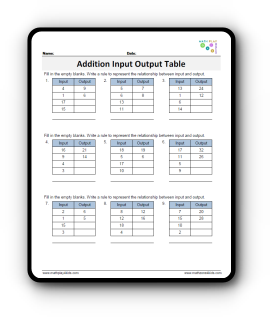
How to do 3 digit addition and subtraction with regrouping
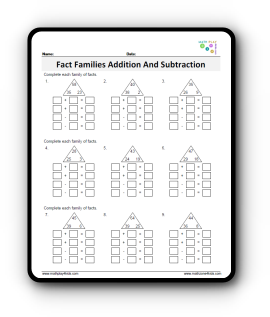
Can you do 3 digit addition and subtraction ? Practice here
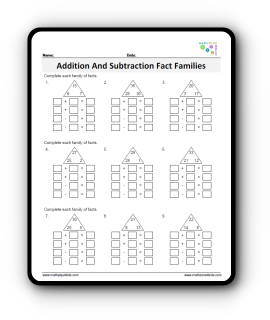
Learn 4 digit addition and subtraction with this worksheet
Here is where to learn adding and subtracting rational expressions
Kids need to learn Adding and subtracting within 20
Practice to learn addition double sentences plus one
2 digit addition and subtraction without regrouping
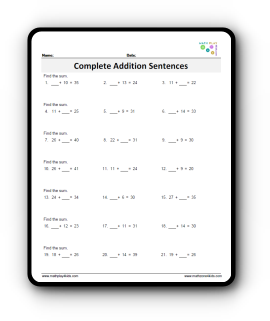
Everyone must learn basic addition. It starts tart here
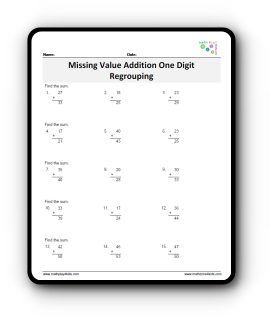
Do you know what is best way to learn addition
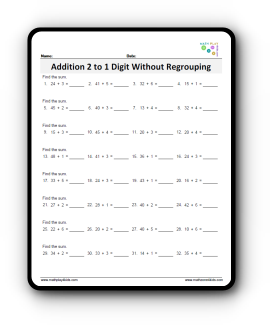
Let your kids try this free worksheet to learn addition
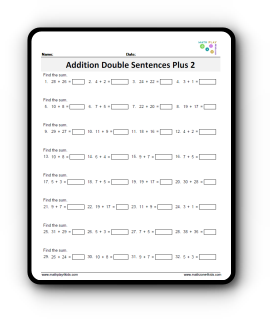
This is a free math addition worksheets for training kids
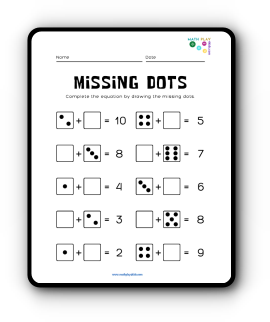
Tool for learning basic addition for kindergarten children
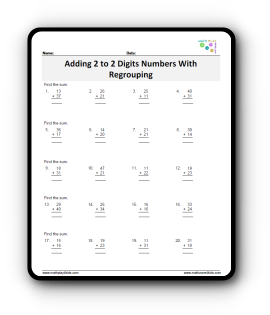
Worksheet helping learners to add and subtract
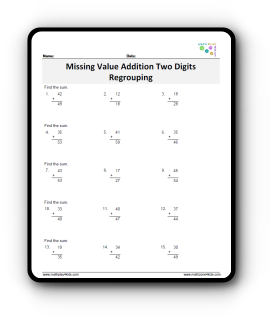
Worksheet about missing 2 values addition regrouping
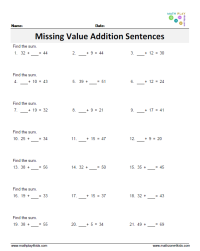
Simple operations on missing value addition sentences
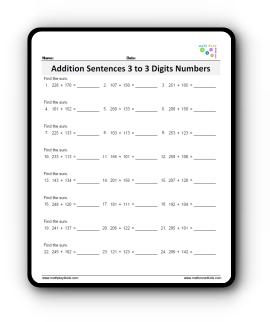
This is our monster math addition worksheet for parents
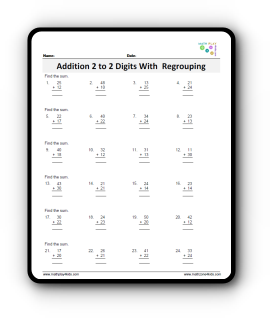
Rely on this worksheet for teaching addition and subtraction
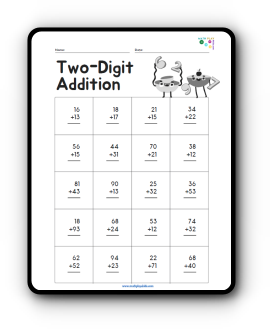
Worksheet to help learn and practice 2 digit addition
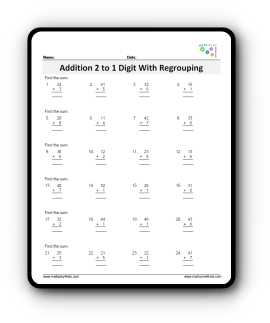
Year 3 addition and subtraction worksheets to learn wisely
Rely on this worksheet for teaching addition and subtraction
[vc_row][vc_column][vc_column_text]
[/vc_column_text][/vc_column][/vc_row]
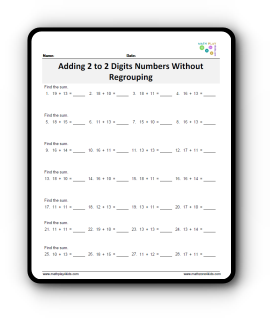
This page offers addition activities for young learners, where 2-digit by 2-digit addition without regrouping worksheets will be experienced. This is an excellent resource for introducing young learners to the concept of adding multi-digit numbers while keeping the process straightforward and accessible. These worksheets are thoughtfully designed to focus on addition problems that do not require regrouping or “carrying over,” making them ideal for beginners who are building foundational arithmetic skills. They provide a supportive environment for students to practice, learn, and gain confidence in their addition abilities.
The primary focus of these worksheets is to strengthen students’ understanding of basic addition rules while avoiding complexities that might overwhelm them. Each problem involves two two-digit numbers, where the sum of the digits in each column is less than 10. This ensures that students only need to focus on adding the numbers directly without needing to carry over any digits to the next column. For example, adding 23 and 41 involves simple steps: adding the ones place (3 + 1 = 4) and then the tens place (2 + 4 = 6), resulting in the answer of 64.
These 2-digit by 2-digit addition without regrouping worksheets are particularly beneficial for elementary students who are just beginning to explore addition with larger numbers. They serve as a bridge between single-digit addition and more advanced concepts like regrouping or working with three-digit numbers. By using structured and straightforward exercises, learners can develop their skills step-by-step, building confidence and accuracy along the way.
The layout of a typical worksheet is clean and well-organized, with plenty of space for students to write their answers. Many worksheets include a mix of vertical and horizontal problems, offering variety and helping students become comfortable with different presentation formats. These creative elements can capture students’ attention and help them view math practice as an exciting activity rather than a chore.
Parents and teachers will find these 2-digit by 2-digit addition without regrouping worksheets to be highly versatile. They can be used as part of classroom lessons, homework assignments, or supplemental practice during school breaks. For parents homeschooling their children, these worksheets are a practical tool for reinforcing addition skills. Teachers can also incorporate them into math centers, group activities, or timed drills to encourage friendly competition and motivate students to improve their speed and accuracy.
Furthermore, these worksheets promote the development of essential math skills beyond addition. They encourage critical thinking, problem-solving, and the ability to focus on multi-step processes. By mastering two-digit addition without regrouping, students establish a strong foundation that will support their progress into more advanced mathematical concepts, such as regrouping, subtraction, and working with larger numbers.
as a result, 2-digit by 2-digit addition without regrouping worksheets are a valuable resource for early learners. They simplify complex ideas, boost confidence, and create a positive learning experience. With regular practice, students can improve their arithmetic skills, strengthen their understanding of addition, and set themselves up for long-term success in mathematics. These worksheets make math learning approachable, fun, and effective!
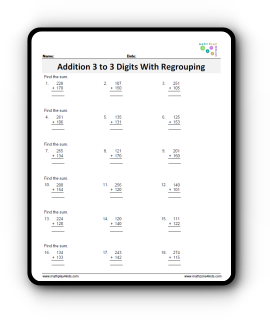
This worksheet page also features addition activities pertaining to 2- and 3-digit addition worksheets. These worksheets serve as an invaluable resource for learners looking to strengthen their foundational math skills. Designed for students at various levels of proficiency, the webpage typically offers printable worksheets tailored for mastering the addition of two-digit and three-digit numbers. Whether created for classroom use, homeschooling, or self-paced practice, these worksheet often caters to a wide audience, including children, teachers, and parents, providing a simple and engaging platform to build essential arithmetic skills.
The structure of this worksheet page centers on fostering a clear and user-friendly experience. It begins with an introductory section that explains the importance of learning multi-digit addition, highlighting how it lays the groundwork for more advanced mathematical concepts like subtraction, multiplication, and division. This introduction might also provide a brief walkthrough of strategies and tips for solving 2- and 3-digit addition problems, such as column alignment, carrying over digits, and mental math techniques.
It is important to mention that some worksheets offered on this page focus on basic 2-digit addition without carrying, making them ideal for beginners. meanwhile others introduce carrying (also called regrouping), which adds a layer of challenge and helps students grasp real-world problem-solving scenarios. Similarly, 3-digit addition worksheets range from straightforward exercises to more complex problems requiring multiple carryovers. These worksheets also feature vertical or horizontal problem arrangements, allowing students to practice different solving approaches.
Engagement is a key focus of this addition webpage. Many worksheets presented on this page integrate colorful, theme-based designs or gamified elements to keep young learners motivated. For instance, worksheets include fun visuals, such as animals, cars, or seasonal themes, to make the learning process enjoyable for younger students. Further, worksheets even provide interactive features, where students can input answers directly online and receive instant feedback, transforming learning into an interactive and rewarding experience.
Additional features found on this 2 and 3 digit addition worksheet page include answer key page attached to each worksheet for self-checking, instructions for parents or teachers to guide young learners, . Some advanced pages might also offer customizability, allowing users to generate their own worksheets by setting parameters, such as the number of problems, the inclusion of word problems, or the difficulty level.
A 2- and 3-digit addition worksheet webpage is more than just a collection of math problems—it’s a well-rounded educational tool designed to instill confidence and competence in learners. By blending structured exercises, creative designs, and modern technology, these webpages play a pivotal role in making math practice accessible, enjoyable, and effective. Their versatility ensures that they remain a go-to resource for anyone looking to master addition while building a solid foundation for future mathematical success.
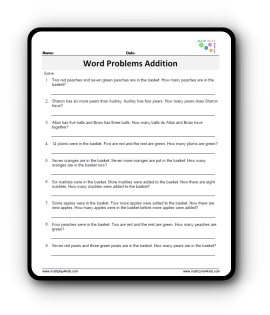
Our amazing addition worksheet page is pertinent in the sense that it strives to offer a Two-Step Addition and Subtraction Word Problems worksheets. This stands for an educational tool designed to engage young learners in mastering foundational math skills through real-life scenarios. By focusing on two-step word problems, this resource not only reinforces students’ abilities to perform basic arithmetic but also enhances their logical reasoning, problem-solving skills, and reading comprehension.
The worksheet typically begins with a brief introduction to help students understand the concept of two-step problems. These problems require the application of addition and subtraction in a sequential manner, which encourages kids to think critically about the order of operations. The introduction includes a simple example, such as: “Emily had 10 apples. She gave 4 apples to her friend and then bought 6 more. How many apples does Emily have now?” This kind of example lays the foundation for students to grasp the process of breaking down multi-step problems.
What makes this type of worksheet particularly appealing is its incorporation of real-world contexts. The problems are designed to be relatable, featuring scenarios like shopping at a store, sharing items with friends, or organizing school supplies. For instance, a typical question found on this page might reads “James bought 5 pencils. He later found 7 more in his drawer but gave 3 to his sister. How many pencils does James have now?” Such relatable scenarios not only make the exercises more engaging but also demonstrate the practical applications of math in daily life.
The worksheets often includes a variety of problems, carefully graded to cater to different skill levels. Some questions may focus on smaller numbers and straightforward calculations, ideal for beginners building confidence. Others might involve larger numbers or require students to think more abstractly, challenging advanced learners to push their boundaries.
Additionally, these worksheets feature visual aids such as illustrations, charts, or number lines to assist students in solving the problems. For example, a number line might help a child visualize the addition and subtraction process, making it easier to understand how the numbers relate to each other. Visual cues not only enhance comprehension but also make the worksheet more visually appealing.
Teachers and parents often appreciate these worksheets because they align with key learning objectives for elementary-level math curricula. They serve as an excellent supplement to classroom instruction, reinforcing what students have learned in a fun and interactive way. Furthermore, they are a valuable tool for assessing a student’s ability to handle multi-step arithmetic problems.
The worksheet page once downloaded and printed out, also include a section for students to show their work. This encourages learners to write down each step of their calculations, helping them understand the importance of a structured approach to problem-solving. Showing work also allows teachers or parents to identify where a student might have gone wrong and provide targeted guidance.
Finally, some world problem addition worksheets feature bonus challenges or games at the end, rewarding students for their effort and motivating them to complete the exercises. These challenges often take the form of puzzles or riddles that require solving additional two-step problems. Overall, a two-step addition and subtraction word problems worksheet is a versatile and effective resource, blending mathematical rigor with creativity to nurture critical thinking and arithmetic skills in young learners.
This our addition page is known for hosting worksheets about Adding and subtracting within 20. Which are other valuable educational tools designed to build and strengthen foundational math skills for young learners. These worksheet pages are addressed to kids from kindergarten to second grade, and serve as an engaging way to help children practice and master the concepts of addition and subtraction with numbers up to 20.
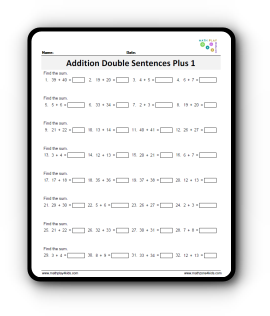
The layout of the addition worksheets worksheets includes a range of activities, offering variety and keeping the learning process dynamic. You’ll typically find straightforward equations where students solve problems such as 8 + 7 = —- or such activities as 12 – 5 = —-, reinforcing their understanding of basic arithmetic operations. For instance, a problem might depict ten apples, with instructions for a student to subtract four to determine the remaining number of apples.
You will also find a great amount of addition equations on this page aiming to introduce year 1 and year 2 children to the concept of addition within 20. These worksheets include fun, interactive elements, such as puzzles, matching games, or color-by-number activities. For example, after solving a set of equations, students might match answers to corresponding images or color sections of a picture based on their solutions. Such activities not only reinforce math skills but also keep learners engaged and motivated, especially those who may find math challenging.
In addition, the worksheets often emphasize word problems to help students apply their skills to real-world scenarios. A problem might ask, “Emma has 13 toy cars. She gave 4 cars to her brother. How many cars does Emma have now?” These exercises encourage critical thinking and problem-solving while strengthening their ability to extract key information from text.
Beyond individual practice, these worksheets support collaborative learning. In this sense, teachers might use them during group activities or math centers, encouraging students to work together and share strategies for solving problems. This collaborative approach to learning addition math fosters communication skills and teamwork, making math an enjoyable and social experience.
The well-designed subtracting within 20 worksheet offered on this page is mostly accessible to learners with varying abilities. Differentiation features, such as problems with varying levels of complexity or optional hints, which allow educators to tailor assignments to meet the needs of individual students. Advanced learners might tackle multi-step problems or explore patterns in subtraction, while struggling students benefit from scaffolded support like number lines or examples.
Moreover, these worksheets align with academic standards, such as the Common Core State Standards in the U.S., ensuring that students are building skills that contribute to long-term academic success. They often incorporate repetitive practice to reinforce concepts, gradually increasing difficulty to challenge students and promote growth.
Parents also appreciate these worksheets for at-home practice, making them a great resource for homework or extra practice outside of school. The versatility of the worksheets—whether printed or accessed digitally—ensures their effectiveness in diverse learning environments.
In sum, adding and subtracting within 20 worksheet pages are essential tools in math education. They combine fun, engagement, and practical applications to build confidence and competence in young learners. With their creative designs and thoughtful exercises, these worksheets help students take their first steps toward becoming proficient mathematicians.
This page offers a variety of addition worksheets, here young children will find a great deal of math addition worksheets to practice math. In the realm of mathematics education, especially for young learners, printable free addition worksheets stand out as a primary tool for practicing and reinforcing foundational arithmetic skills. With the evolving landscape of education, especially in the digital era, the simple yet effective concept of these worksheets has been a staple in both traditional and contemporary teaching methodologies. Let’s delve into a comprehensive exploration of these educational tools.
Origin and Purpose:
Addition is one of the first mathematical operations taught to children. Its simplicity and applicability in daily life make it a foundational skill. Before the digital boom, printed worksheets, often curated by teachers or sourced from textbooks, were the primary means for students to practice this skill. Their main purpose? To offer repetitive practice, ensuring students internalize the concept and can perform addition without hesitation.
With the expansion of the internet and the digital resources available, many educators, institutions, and enthusiasts started sharing their curated addition worksheets online, making them accessible for free. This democratization of educational resources meant that parents, teachers, and self-learners could easily download, print, and use these sheets without incurring any cost.
Cost-Efficient: Being free, they remove barriers to access, ensuring that every student, irrespective of their economic background, can have resources to practice addition.
Flexibility: With the ability to print on-demand, educators and parents can provide fresh sets of problems for students regularly, ensuring diverse practice.
Customization: Many online platforms offer the ability to tailor the difficulty level, format, and appearance of the worksheets, making them adaptable for different learning needs.
Tangibility: In an age dominated by screens, printable worksheets offer a tactile learning experience. The act of writing can reinforce learning and improve memory retention.
Feedback Loop: These worksheets provide an easy way for educators or parents to review, correct, and provide feedback, fostering a strong learning loop.
While the traditional addition worksheets are effective, many free resources now incorporate innovative teaching methods, such as:
Math Stories: Worksheets that frame math problems within a narrative or story, making them more relatable and engaging.
Coloring Activities: As discussed earlier, combining art with arithmetic can make learning more enjoyable.
Puzzles and Games: Some worksheets transform addition problems into puzzles, crosswords, or games, introducing an element of fun.
Challenges and Considerations:
While printable free addition worksheets offer numerous advantages, there are aspects to be mindful of:
Quality and Accuracy: Since many resources are freely available, there’s variability in quality. It’s essential to source worksheets from reputable platforms or educators.
Over-reliance: Worksheets are a tool among many in the pedagogical toolkit. Over-relying on them at the expense of interactive or experiential learning can limit a student’s holistic development.
Environmental Concerns: The convenience of printable worksheets can lead to excessive printing. It’s essential to consider sustainability, perhaps by recycling or reusing paper where possible.
With increasing digital integration in education, one might wonder about the future of printable resources. However, they are far from becoming obsolete. The tangible nature of worksheets, combined with the potential eye strain and distractions from digital devices, ensures that printed resources will remain a significant part of the educational landscape.
Moreover, hybrid approaches are emerging. For instance, QR codes on printed sheets that link to video explanations, or augmented reality (AR) integration where scanning a portion of the worksheet with a device can bring up interactive 3D models or further information.
Printable free addition worksheets have been, and continue to be, an invaluable tool in foundational math education. They represent more than just paper and numbers; they signify the democratization of education, the blending of traditional and modern teaching methods, and the adaptability of educational tools in ever-evolving learning environments. As with any tool, the key lies in its judicious use, ensuring it complements a diverse array of learning methods to offer students a well-rounded mathematical education.
Math Coloring Addition Worksheets are educational resources that combine the principles of basic arithmetic, specifically addition, with the fun activity of coloring. The aim of these worksheets is to make learning more engaging for students, particularly younger ones, by introducing a visual and artistic element to math problems. Here’s a breakdown of what you can expect from such worksheets:
Addition Problems: Each worksheet typically contains a set of addition problems. For instance, you might find problems like “4 + 3” or “5 + 2” scattered across the page.
Color Codes: Along with the math problems, there’s a color key provided. Each potential answer to an addition problem corresponds to a specific color. For instance, the number “7” might be paired with the color blue.
Pictures with Numbered Sections: The worksheet will have a picture or pattern divided into different sections. Each section has an addition problem associated with it.
Solving and Coloring: Students solve each addition problem and then color the corresponding section of the picture with the color that matches their answer. For instance, if a section labeled “4 + 3” is in the area of the picture that’s meant to be a sky, and the answer (7) corresponds to blue in the color key, the student would color that section blue.
End Result: Once all the addition problems are solved and the sections colored in, a colorful picture emerges. This provides a rewarding and tangible outcome for the student’s hard work.
Benefits:
Engagement: By integrating coloring, an activity many children enjoy, math becomes more appealing.
Reinforcement: The act of coloring in the correct answer reinforces the correct solution and helps in memory retention.
Error Identification: Mistakes in calculation can lead to incorrect coloring, making it easy for both students and educators to identify and rectify errors.
Hand-Eye Coordination: For younger kids, coloring can help in developing fine motor skills and hand-eye coordination.
In summary, math coloring addition worksheets are a fusion of art and arithmetic, aiming to make the learning process more enjoyable and effective for students.
Themes and Holidays: Many math coloring addition worksheets come with themes related to holidays (like Christmas, Halloween, or Easter) or popular children’s characters. This makes it even more engaging for students who get excited about those specific themes.
Complexity Levels: The worksheets can be differentiated based on the complexity of the addition problems. For beginners, they might just have single-digit addition, while advanced sheets might incorporate two-digit or even three-digit addition problems.
Different Operations: While we’re focusing on addition here, the same concept can be applied to other arithmetic operations like subtraction, multiplication, or division. There are coloring sheets available for each.
Applications in Different Settings:
Classroom: Teachers can use these worksheets as a fun way to reinforce addition skills or to give students a break from traditional worksheets.
Home: Parents can use them for homework or as an extra-curricular activity on weekends or holidays.
Special Education: These worksheets can be particularly beneficial in special education settings. The visual and tactile nature of coloring can be therapeutic and offers an alternative mode of learning.
Things to Consider:
Quality of Materials: If being used in a classroom or at home, ensure that non-toxic coloring materials are provided. Crayons or colored pencils are often preferred for younger children.
Guidance: Especially for younger kids, some guidance might be needed initially to help them understand the connection between solving the math problem and choosing the right color.
Feedback: Always remember to give positive feedback. Celebrate the child’s successes. If there are errors, use them as learning moments rather than moments of criticism.
Hence, math coloring addition worksheets, and similar educational resources, are a testament to the creative ways in which educators and content creators are striving to make learning more interactive and enjoyable. The blend of logical (math) and creative (coloring) tasks stimulates both hemispheres of the brain, potentially enhancing cognitive function and retention. It’s a refreshing take on the traditional methods of teaching arithmetic and offers a multifaceted approach to education.


