
 3d shapes volume and surface area worksheets
 Angles Worksheets, Practice angles measurement
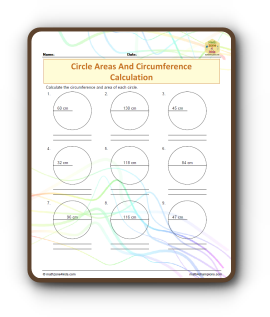 Area and circumference calculation worksheet
 Area and perimeter Calculation worksheets
 Learn the area formula of rectangle worksheet
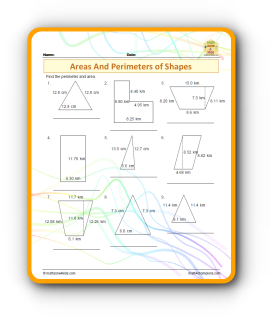 Area of composite figures worksheet PDF for kids.
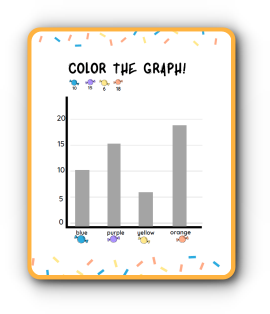 Bar chart worksheet on candies representations
 Cartesian Plane Worksheet For 4 quadrans
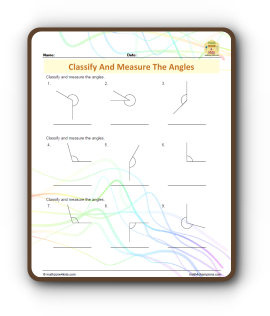 Classification of triangles math worksheet
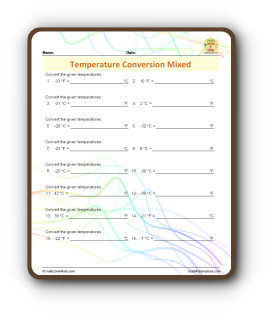 Convert celsius to fahrenheit worksheet
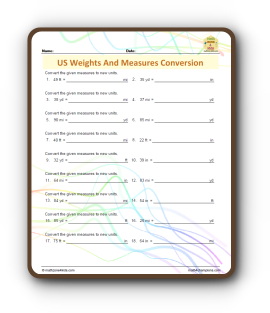 Learn how to convert-kg to lbs with this worksheet
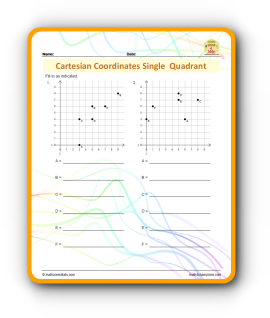 Coordinate plane worksheets calculation
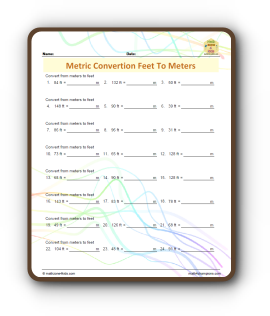 Practice feet to meters worksheet conversion
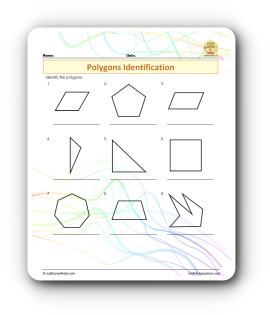 How to identify and classify polygons worksheet
 This is a line plot graph worksheets
 Measuring angles worksheet ready to use
 Metric conversion chart ready to use
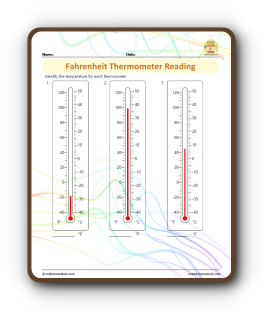 Reading a thermometer in celsius worksheet
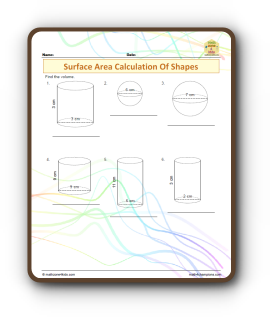 Roof surface area calculator to practice
 volume measurement worksheet
 Weight measurement worksheet for kids
This page embodies worksheets related to metric conversion, referred to as the metric conversion chart, where students will learn and practice the conversion of values into various metrics. In this sense, we welcome you to our Metric Conversion Chart math resource, your one-stop resource for mastering metric conversions!
This page is designed to help students understand and perform conversions between different metric units efficiently and accurately. Whether it’s for length, weight, volume, or temperature, our worksheets provide comprehensive practice and clear explanations to ensure students gain confidence in using the metric system.
The worksheets begin with an overview of the metric system, including the basic units of measurement for length, typically meters, centimeters, millimeters, this foundational knowledge is essential for understanding how to convert between units. This means that the worksheets include detailed metric conversion charts that serve as handy reference tools. These charts list the different units and their equivalents, making it easy for students to quickly find and use the information they need for conversions
The worksheet is laid out with a variety of exercises providing ample practice in converting between metric units. From simple conversions like centimeters to meters, from feet to meters and from kilometers to miles as well as to more complex problems involving multiple steps conversion, these exercises help students build proficiency and accuracy.
To highlight the practical relevance of metric conversions, the worksheets include real-world scenarios. In this sense, students might convert measurements for a science experiment, calculate the volume of liquid ingredients for a recipe, or determine the weight of objects in different units. These activities make learning meaningful and applicable to everyday life
The worksheets are designed to cater to different skill levels, starting with basic conversions and gradually introducing more complex problems. This progression ensures that all students, regardless of their initial ability, can improve and succeed.
Each worksheet is attached with a comprehensive answer keys with detailed explanations allowing students to check their work and understand any mistakes. This feature is particularly useful for self-study and reinforces learning through feedback.
The current measurement worksheet page holds another section dedicated to the cartesian plane. This is a pillar in helping students understand what a cartesian plane is. as such, welcome to our Cartesian Plane Worksheet Page, your ultimate resource for mastering the concepts of the Cartesian coordinate system.
These worksheets are designed to guide students through the fascinating world of graphing, plotting points, and understanding the fundamentals of the Cartesian plane. Ideal for use in classrooms, homeschooling, or as supplementary material, our worksheets make learning about the Cartesian plane engaging and accessible.
Through these worksheets, students will understand the history behind the cartesian plane, and then grasping the importance, and components of a sound cartesian plane. Students will learn about the origin, x-axis, y-axis, and the four quadrants, in order to build their foundation in this math subject.
Students will practice plotting points on the Cartesian plane using ordered pairs (x, y). Activities include identifying coordinates of given points and plotting points from provided coordinates, reinforcing the concept of locating points in different quadrants. In this same line, worksheets cover the properties of the four quadrants on the Cartesian plane. Students will learn to identify which quadrant a point belongs to based on its coordinates and how to navigate between the various quadrants.
Thus, plotting coordinate points to reveal images, and coordinate plane puzzles, are practical examples to keep students engaged and motivated. These activities make learning about the Cartesian plane enjoyable and rewarding.
Given the above, students will be confronted to activities that involve graphing lines and geometric shapes, such as triangles, rectangles, and polygons, using their vertices’ coordinates. These exercises help students understand the relationships between points and the shapes they form.
By the means of the distance and midpoint formulas, the worksheets guide students through calculating the distance between two points and finding the midpoint of a line segment. These exercises enhance analytical skills and understanding of geometric principles.
Thus, to highlight the practical relevance of the Cartesian plane, our worksheets include real-world scenarios where graphing and plotting are essential. Students might map out locations on a grid, track movements on a coordinate plane, or solve problems involving navigation and planning in their future career.
As a result, Our Cartesian Plane Worksheet Page is more than just a set of practice problems—it’s a comprehensive educational tool designed to make learning about the Cartesian coordinate system engaging, practical, and fun. By combining clear explanations, interactive activities, and real-world applications, these worksheets help students build a strong understanding of graphing and plotting points.
This material is perfect for use in the classroom, at home, or as supplementary learning material, they provide a thorough and enjoyable way for students to enhance their mathematical skills. Embark on this graphing journey and watch your students’ confidence and competence in using the Cartesian plane worksheets presented ont his page.
Discover this other interesting section of this our heavily loaded worksheet page on measurement. this section focuses on the calculation of area of composite figures. Thus we welcome you to our Area of Composite Figures Worksheet Page which is comprehensive resource designed to help students master the challenging but fascinating concept of calculating the area of composite figures.
These worksheets offer step-by-step guidance and diverse exercises to ensure that learners can confidently break down complex shapes into manageable parts, enhancing their understanding of geometrical measurement and spatial reasoning.
Detailed instructions guide students through the process of calculating the area of composite figures. The worksheets emphasize the importance of breaking down complex shapes into simpler ones, calculating the area of each part, and then combining these areas to find the total.
There are a huge amount of composite figures out there. however, exercises cover a wide range of composite figures, including those composed of rectangles, triangles, circles, semi-circles, trapezoids, and more. This variety ensures that students gain experience working with different geometric shapes and their unique area formulas.
The worksheets are filled with visual aids and diagrams that help students visualize the breakdown of composite figures with their respective distances whist the area calculation will be required according to various distances. These illustrations make it easier to understand how to separate complex shapes into simpler ones and identify the relevant area formulas to use.
In this sense, it is easy to realize that worksheets include real-world scenarios where calculating the area of composite figures is essential. Students might solve problems involving the layout of a park, the design of a garden, or the floor plan of a building, making learning meaningful and applicable.
Moreover, exercises that require breaking down complex shapes and applying different area formulas encourage critical thinking and problem-solving, vital skills for academic success and everyday life.
As a result, Our Area of Composite Figures Worksheet can be perceived as more than just a collection of practice problems , it’s a comprehensive educational tool designed to make learning about composite figures engaging, practical, and fun. By combining clear explanations, interactive activities, and real-world applications, these worksheets help students build a strong understanding of geometrical measurement and spatial reasoning.
Are you sometimes confused about weights displayed in kg would be in lbs. well, you are at the right place. This page offers math exercises in the form of worksheets, where you can learn and practice kg to lbs conversion in no time. As such, we wish you a very warm welcome to our Convert Kg to Lbs Worksheet Page, your essential resource for mastering the skill of converting between kilograms and pounds. This page is designed to make learning conversions between the metric system and the imperial system engaging and straightforward. Whether for academic purposes or real-life applications, our worksheets provide comprehensive practice and clear explanations to ensure students gain confidence in performing these conversions.
The worksheets begin with an overview of the metric and imperial systems, explaining the basic units of mass: kilograms (kg) in the metric system and pounds (lbs) in the imperial system. This foundational knowledge is crucial for understanding how to convert between the two systems.
Navigating through this page and trying out several activities offered, detailed instructions guide students through the conversion process. The worksheets explain the conversion formula: 1 kg = 2.20462 lbs. Students will learn to apply this formula in both directions, converting kilograms to pounds and pounds to kilograms, ensuring a solid grasp of the concept.
As the learners follow along, a variety of exercises provide ample practice in performing conversions. Problems range from simple, single-step conversions to more complex tasks involving multiple steps and decimal calculations. These exercises help students build proficiency and accuracy.
To highlight the practical relevance of these conversions, the worksheets include real-world scenarios. Students will learn how to convert the weights of everyday items, calculate luggage weight limits, or convert body weights from kilograms to pounds. These activities make learning meaningful and applicable to our daily life.
How can we offer worksheets conversion worksheets without mentioning anything about volume measurement. unsurprisingly, there is a whole section on this page devoted to volume measurement. we hereby, welcome you to our Volume Measurement Worksheet Page. Which is a vital resource for students eager to explore the fascinating world of three-dimensional space. These worksheets are meticulously crafted to make learning about volume engaging and accessible, guiding students through the essential concepts and calculations involved in measuring the volume of various objects.
It is important for kids to learn how to define volume as the amount of space occupied by a three-dimensional object and understand the basic units of measurement used for volume, such as cubic centimeters (cm³), cubic meters (m³), milliliters (ml), and liters (l).
In other words, Students will start by learning how calculate the volume of basic geometric shapes, such as cubes and rectangular prisms. Worksheets include step-by-step instructions on using the volume formulas V=l×w×h that is l times w times h for rectangular prisms and V=s³ for cubes, where l is length, w is width, h is height, and s is the side length.
As students progress, they will encounter more complex shapes and composite figures, such as cylinders, cones, spheres, and irregular shapes. Worksheets guide students through using and understanding the relevant volume formulas. below are some example students in their 10th grade should consider getting familiar with in order to perform volume measurement exercises.
For Cylinders: V=π × r²
For Cones: V=(1/3)πr²h
For Spheres: V= (4/3)πr³
Is also important to point out that for composite figures, students will practice breaking them down into simpler shapes and then calculate the volume of each part, and then summing these volumes to find the total.
Volume measurement calculation is very important in out day to day lives. As a result, the practical relevance of volume measurement as well as the worksheets provided on this page include real-world scenarios and problems. Students will learn how to calculate the volume of a swimming pool, the capacity of a container, or the amount of liquid needed to fill a tank. These activities make learning meaningful and demonstrate the importance of understanding volume in everyday life.
By focusing on volume measurement, these worksheets help students develop a fundamental understanding of three-dimensional geometry, which is essential for success in higher-level math courses
Kindly note that a comprehensive answer keys with detailed explanations are provided, allowing students to check their work and understand any mistakes. This feature is particularly useful for self-study and reinforces learning through feedback.
In conclusion, our Volume Measurement Worksheet Page is a comprehensive educational tool designed to make learning about volume engaging, practical, and fun. By combining clear explanations, interactive activities, and real-world applications, these worksheets help students build a strong understanding of three-dimensional geometry and volume measurement. Perfect for use in the classroom, at home, or as supplementary learning material, they provide a thorough and enjoyable way for students to enhance their mathematical skills. Dive into the world of volume measurement and watch your students’ confidence and competence grow
In the ever-evolving landscape of education, the need for effective teaching tools has never been more crucial. Conversion units worksheets, a fundamental resource in the realm of mathematics, play a pivotal role in helping students grasp the complexities of unit conversions. In this page, we offer good. amount of conversion units worksheets, exploring their significance, benefits, and how they can be optimized for enhanced learning experiences for primary school children.
In this sense, we welcome you to our Conversion Units Worksheets page, your ultimate resource for understanding and mastering unit conversions. These worksheets are designed to help students of all ages navigate the often confusing world of converting between different units of measurement. Whether it’s length, weight, volume, or temperature, our worksheets offer comprehensive practice to ensure that learners can confidently and accurately make conversions in both everyday and academic contexts.
As such, the worksheets begin with an overview of various units of measurement, including the metric and customary systems. Students will learn to recognize and understand units for length (meters, kilometers, inches, feet), weight (grams, kilograms, ounces, pounds), volume (milliliters, liters, cups, gallons), and the temperature (Celsius, Fahrenheit).
Conversion units worksheets are more than just tools for teaching math. They are building blocks for essential life skills. As educators, it’s our responsibility to craft engaging and effective worksheets that empower students with the knowledge they need. Incorporate clear organization, real-life examples, and technology to create conversion units worksheets that not only help students ace their math classes but also equip them with valuable problem-solving skills for life beyond the classroom.
This is exactly what we offer on this conversion units. worksheets page. By optimizing conversion units worksheets, we can enhance the educational experience and prepare the next generation for a world where math literacy is more important than ever. So, let’s embrace the potential of these worksheets and unlock a brighter future for our students
Temperature worksheets for kindergarten are educational materials designed to introduce young learners to the concept of temperature and help them understand how it relates to their everyday lives. These worksheets are typically colorful and engaging, making the learning process fun and interactive for kindergartners. Here are some key elements you might find in temperature worksheets for kindergarten offered on this page.
These worksheets often start with a simple explanation of what temperature is. This might include basic vocabulary words like “hot” and “cold” along with images or illustrations to help kids grasp the idea.
Temperature refers to a measure of how hot or cold something is. It is a fundamental concept in science and is used to describe the degree of warmth or coldness of an object, substance, or environment. Temperature is typically measured using a scale, with the most common scales being Celsius (°C) and Fahrenheit (°F). In scientific contexts, the Kelvin (K) scale is also used. Here’s a brief explanation of these temperature scales:
Temperature is a crucial parameter in various fields, including meteorology (the study of weather), physics, chemistry, and everyday life. It helps us understand and describe the thermal properties of substances, the behavior of gases, and the effects of temperature on materials and living organisms. Monitoring temperature is essential in many industries and activities, such as cooking, climate control, medical applications, and more.
Kindergarten temperature worksheets often feature pictures of thermometers. Children can learn to recognize and understand how a thermometer works to measure temperature. They might be asked to identify whether the temperature is high (hot) or low (cold) based on the thermometer’s reading. Thermometer worksheets are educational materials that help students learn about thermometers and how to read them.
These worksheets are typically used in science and math lessons and are designed to teach students the basic principles of temperature measurement and how to interpret the readings on a thermometer. Here are some common elements and topics covered in thermometer worksheets:
Comparing temperatures is a valuable skill that is used in everyday life, science, and various professions. It helps us make informed decisions, adapt to changing weather conditions, and gain insights into temperature-related phenomena
Thermometer worksheets are valuable tools for science teachers to help students grasp the concept of temperature and become proficient in reading and using thermometers. They provide a hands-on approach to learning about temperature measurement and are often accompanied by practical activities where students get to use actual thermometers to take readings. These worksheets are essential in building a foundation for understanding temperature and its significance in various scientific and everyday contexts
Seasonal Temperature:
To connect temperature to the seasons, worksheets may include images of different weather conditions like sun, rain, snow, and wind. Kids can be encouraged to associate certain temperatures with specific seasons, such as hot summers and cold winters.
Matching Activities:
Matching activities are common in kindergarten worksheets. Kids may be asked to match objects or clothing items (e.g., sun with sunglasses, snowflake with mittens) to the appropriate temperature (hot or cold).
Coloring and Drawing:
Worksheets often include coloring or drawing tasks. For instance, children may be asked to color the sun yellow and the snowflake blue, reinforcing the connection between temperature and weather conditions.
Temperature Comparison:
Some worksheets introduce the concept of comparing temperatures. Children may be given two thermometers with different readings and asked to identify which one represents a hotter or colder temperature.
Hands-On Activities:
To make learning more tactile, some worksheets may incorporate hands-on activities like measuring the temperature of water with a thermometer or touching objects to describe if they feel hot or cold.
Simple Questions:
Worksheets may include simple questions that encourage kids to think about temperature-related topics. For example, they might be asked, “What do you wear when it’s hot outside?” or “What happens to water when it’s very cold?”
Interactive Games Worksheets On Temperature
In the digital age, there are also interactive temperature games and apps designed for kindergartners. These can be used as supplementary materials to reinforce learning. Temperature worksheets for kindergarten aim to lay the foundation for understanding temperature as a concept while also helping children make connections between temperature and the world around them. They promote early science literacy and critical thinking skills in a fun and engaging way, setting the stage for further exploration of weather and temperature as children progress through their education


